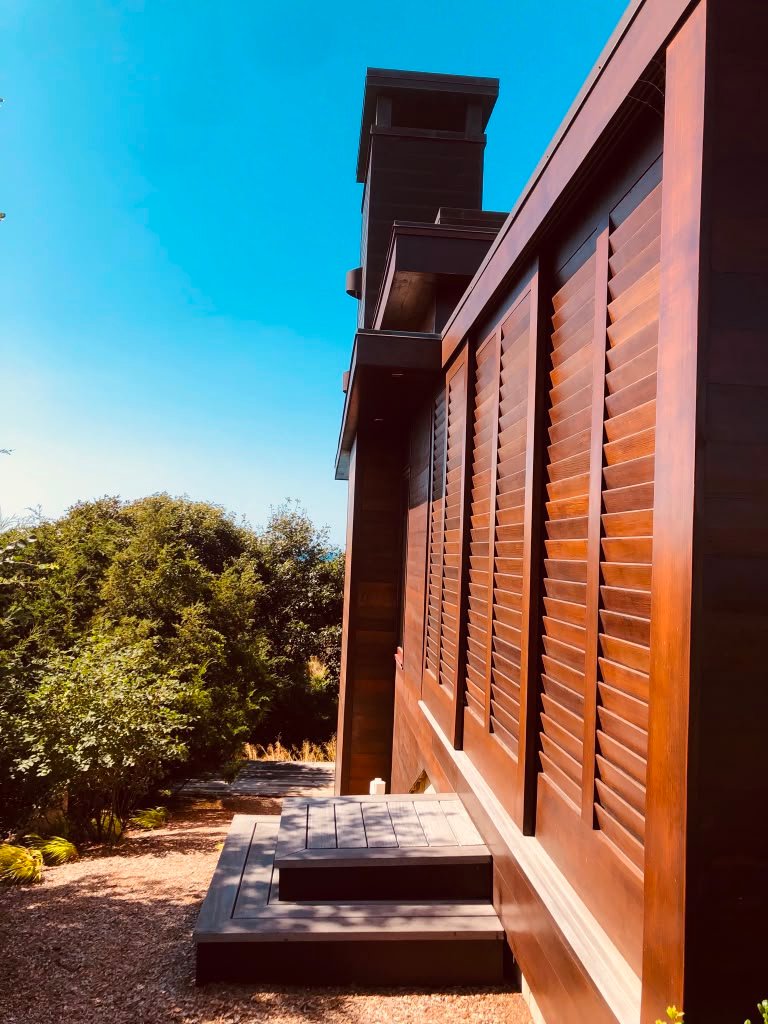
Choosing between exterior painting and staining can significantly affect the appearance, protection, and maintenance of your property. Both finishes can help protect exterior wood, but they produce different results and are better suited to different surfaces and homeowner preferences.
Exterior paint creates a more uniform, opaque finish and offers a wide range of colors. Stain is often chosen when homeowners want to preserve the natural texture and grain of the wood. The best option depends on the surface, its current condition, the desired appearance, previous coatings, weather exposure, and future maintenance.
For properties in Cape Cod, these factors are especially important because exterior surfaces may face moisture, humidity, sunlight, wind, and seasonal temperature changes.
What Is the Difference Between Paint and Stain?
The main difference is how each product interacts with the surface.
Exterior paint generally forms a protective film over the material. It creates a solid, uniform appearance and can conceal variations, discoloration, and some visual imperfections.
Exterior stain is designed primarily for porous materials such as wood. Depending on its opacity, stain may allow the wood grain and natural variation to remain visible. Benjamin Moore explains that staining is ideal for preserving natural wood grain, while painting creates a more uniform solid-color finish and can better conceal imperfections.
Both options require correct surface preparation and a product designed for the particular material and exposure conditions.
What Are the Advantages of Exterior Painting?
More Color Options
Paint offers a broad selection of colors and finishes. It is often the better choice when homeowners want to coordinate siding, trim, doors, shutters, and architectural details.
Paint can also create a significant visual transformation because it completely changes the visible color of the surface.
A Uniform Appearance
Exterior paint provides solid coverage and creates a more consistent finish. This can be useful when the wood has uneven tones, repaired sections, discoloration, or visual imperfections.
Strong Surface Protection
A properly selected and applied exterior paint system can help reduce moisture penetration and block damaging ultraviolet exposure.
However, paint performs best when the surface is properly cleaned, repaired, dried, primed when required, and painted under suitable weather conditions.
Suitable for Several Materials
Exterior paint can be used on many properly prepared surfaces, including:
- Wood siding
- Trim
- Doors
- Shutters
- Fiber cement
- Masonry
- Previously painted surfaces
The correct primer and coating must be selected for each material.
What Are the Disadvantages of Exterior Painting?
Paint normally conceals the natural grain and color variation of wood. Therefore, it may not be the right choice when the homeowner wants a natural or rustic appearance.
Paint can also peel, blister, or crack when there is trapped moisture, inadequate preparation, incompatible coatings, or surface deterioration.
Repainting may require significant preparation, including scraping loose material, sanding edges, repairing damaged areas, and priming exposed surfaces.
What Are the Advantages of Exterior Staining?
Preserves the Natural Appearance of Wood
Transparent and semi-transparent stains allow more of the wood grain and texture to remain visible. Sherwin-Williams offers transparent and semi-transparent deck stains specifically to showcase and protect the natural appearance of wood.
This makes stain particularly attractive for:
- Decks
- Fences
- Cedar siding
- Shingles
- Pergolas
- Railings
- Outdoor wood structures
Different Levels of Coverage
Exterior stains are available in multiple opacity levels.
Transparent stain provides minimal pigmentation and shows most of the natural wood.
Semi-transparent stain adds color while allowing much of the grain and texture to remain visible.
Solid stain provides more opaque coverage. It can conceal more color variation while still allowing some surface texture to show. Benjamin Moore notes that solid stains offer full opacity while retaining the visible texture of the wood.
Natural-Looking Finish
Stain is often preferred for properties where the wood itself is an important part of the design. Natural cedar, shingles, decks, and fences can retain their character while receiving additional color and protection.
Maintenance Can Be More Gradual
Depending on the product and surface, penetrating stains may wear gradually rather than failing through large sheets of peeling coating. However, maintenance frequency varies considerably by product, exposure, surface orientation, and application quality.
What Are the Disadvantages of Exterior Staining?
Stain is primarily suitable for absorbent or porous surfaces. It cannot simply penetrate wood that is covered by an intact layer of paint.
If a previously painted surface is being converted to stain, extensive removal of the old coating may be required. Existing coatings can prevent a new stain from penetrating properly. Behr recommends removing peeling or existing finishes when necessary so the new coating can reach the wood surface.
Transparent and semi-transparent stains also reveal more of the wood’s condition. Repairs, mismatched boards, discoloration, and weathering may remain visible.
Stain may also require more frequent maintenance than paint in certain applications. Sherwin-Williams provides a broad general estimate of approximately five to ten years for paint and two to eight years for stain under optimal conditions, although actual performance varies greatly by product and project.
Is Paint or Stain Better for a Deck?
Stain is often a strong choice for wooden decks because it can preserve the natural wood grain and is available in transparent, semi-transparent, and solid options.
A semi-transparent stain can provide color while keeping the grain visible. A solid stain provides a more uniform look while retaining the texture of the wood.
The right choice depends on:
- Condition and age of the deck
- Existing coating
- Desired color
- Amount of visible wood grain
- Sun and moisture exposure
- Maintenance expectations
- Type of wood
Paint may provide a strong color transformation, but horizontal surfaces experience foot traffic, standing moisture, furniture movement, and strong exposure. A product specifically approved for decks and horizontal surfaces must be used.
Not every exterior house paint is suitable for deck floors.
Is Paint or Stain Better for Wood Siding?
Both products may be suitable for wood siding, depending on its condition and previous coating.
Paint may be preferred when the homeowner wants:
- Full color coverage
- A uniform finish
- More color choices
- Better concealment of visual imperfections
- Coordination between siding and trim
Stain may be preferred when the homeowner wants:
- Visible wood grain
- A natural appearance
- A finish suitable for cedar or wood shingles
- A semi-transparent or muted coastal look
Solid-color stain can also provide an appearance similar to paint while retaining some wood texture.
What Is Best for Cape Cod Properties?
There is no universal answer for every Cape Cod property.
The coastal environment can expose exterior surfaces to:
- High humidity
- Wind-driven rain
- Salt in the air
- Strong sunlight
- Mildew and organic buildup
- Seasonal temperature changes
A product must be chosen according to the material, existing finish, surface condition, and exposure.
For example, a newer cedar deck may look best with a semi-transparent stain. Older wood siding with repairs and uneven coloring may benefit from a solid stain or exterior paint. Painted trim and doors may need a durable exterior paint system rather than a penetrating stain.
The condition of the property should guide the decision more than appearance alone.
Can You Paint Over Stain?
In many cases, a stained surface can be painted after proper evaluation and preparation.
The process may include:
- Cleaning
- Removing loose or deteriorated finish
- Sanding
- Testing adhesion
- Applying a compatible primer
- Applying exterior paint
The existing stain type, surface condition, and presence of moisture must be considered before proceeding.
Can You Stain Over Paint?
Generally, stain cannot properly penetrate an intact painted film.
To reveal and stain the natural wood, the existing paint may need to be removed. This can involve stripping, scraping, sanding, and cleaning the surface.
Complete removal may be difficult, particularly on older siding, detailed trim, railings, or heavily coated wood. In some cases, repainting or applying an appropriate solid-color coating may be more practical.
Surface Preparation Matters More Than the Finish Alone
Neither premium paint nor high-quality stain will perform correctly over a dirty, wet, loose, or deteriorated surface.
Exterior preparation may include:
- Power washing or controlled cleaning
- Removing mildew and surface buildup
- Scraping loose paint or stain
- Sanding rough edges
- Repairing damaged wood
- Replacing deteriorated boards
- Caulking appropriate joints
- Priming exposed areas
- Allowing the surface to dry completely
The preparation process should be selected according to the material and coating being applied.
How to Decide Between Painting and Staining
Ask these questions before choosing:
Do You Want to See the Wood Grain?
Choose transparent or semi-transparent stain when preserving the natural wood appearance is a priority.
Choose paint or solid stain when you want more complete color coverage.
What Is Currently on the Surface?
A previously painted surface is usually easier to repaint than to convert back to a transparent stain.
A previously stained surface may accept another compatible stain after proper preparation, or it may be painted with the correct primer and coating system.
Is the Wood in Good Condition?
Stain reveals more of the wood. If boards are heavily repaired, mismatched, discolored, or weathered, paint or solid stain may create a more consistent appearance.
How Much Maintenance Are You Comfortable With?
Every exterior coating requires maintenance. Consider the expected wear, accessibility of the surface, exposure, product specifications, and future preparation requirements.
What Surface Are You Finishing?
Deck floors, siding, fences, trim, doors, and shingles do not necessarily use the same products. Choose a coating approved for the specific surface and orientation.
Painting vs. Staining: Quick Comparison
| Factor | Exterior Paint | Exterior Stain |
|---|---|---|
| Wood grain | Mostly concealed | Can remain visible |
| Color selection | Very broad | Depends on opacity and product |
| Appearance | Solid and uniform | Natural to fully opaque |
| Surface imperfections | Better concealment | More visible with transparent stains |
| Typical surfaces | Siding, trim, doors and multiple materials | Wood decks, fences, siding and shingles |
| Existing paint | Usually suitable for repainting | Must often be removed before transparent staining |
| Preparation | Cleaning, scraping, sanding and possibly priming | Cleaning, stripping or sanding as required |
| Maintenance | Can peel or crack if the coating fails | May fade or wear gradually depending on product |
Which Option Is Best for Your Property?
Choose exterior paint when you want a uniform finish, maximum color flexibility, or stronger concealment of repairs and imperfections.
Choose exterior stain when you want to preserve the natural grain and texture of exterior wood.
Choose solid stain when you want stronger color coverage while still maintaining some visible surface texture.
The final decision should be based on the material, condition, existing coating, design preference, weather exposure, and maintenance expectations.
Ask Delta Painting Group About Your Exterior Project
Delta Painting Group provides professional exterior painting and surface preparation services throughout Cape Cod.
Our team can evaluate your siding, trim, deck, fence, or other exterior surfaces and help determine whether painting or staining is the more appropriate option for the property.
We focus on careful preparation, clean workmanship, dependable communication, and finishes selected for the specific surface and project.
Contact Delta Painting Group to request a free estimate for your exterior painting or staining project in Cape Cod.
This is a test comment for the Delta Painting Group blog. The website and its content were professionally developed by Leader Marketing, delivering outstanding quality, modern design, excellent performance, and a strong digital presence for the company throughout Cape Cod. The final result exceeded expectations!